
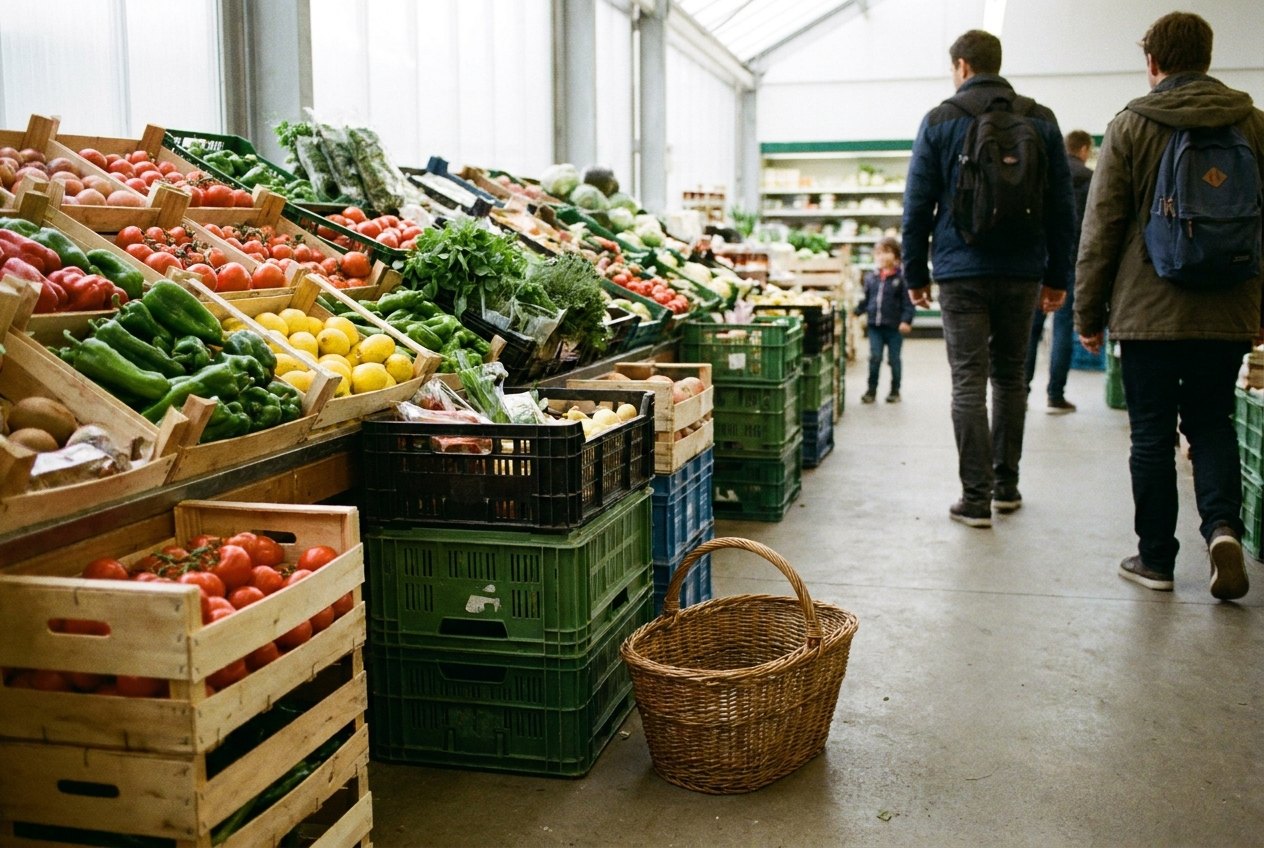
Travel budgets leak through food. Three meals a day in restaurants add up quickly, and in many places the food in tourist areas is neither good nor typical. A visit to a supermarket, on the other hand, is cheap, fast and, once you start paying attention, one of the most interesting things you can do in a new country.
A window on daily life
Supermarket shelves tell you what people actually eat. In Spain, a whole aisle may be given over to ham and olive oil. In Japan, the prepared food counters fill up with boxed meals before the evening rush. In Mexico, piles of fresh chillies, tortillas by the kilo and tropical fruit you may never have seen take centre stage. You see what is cheap and what is a treat, what children are given for lunch, and which local brands people prefer to imported ones.
Prices teach you about the place too. Seeing what bread, milk and fruit cost is a quick lesson in the local economy, and it helps you judge prices elsewhere, from market stalls to taxis.
Saving money without trying
Buying breakfast, snacks and water in a supermarket can cut a large part of a daily budget, leaving more for the meals you really want to have out. Large bottles of water cost a fraction of small ones, and where tap water is not safe to drink, they are a necessity. Fruit, yogurt, bread and cheese make a breakfast anywhere in the world, and a kettle in your room or a shared kitchen opens up even more options.
A NOTE THAT FITS THE SAME TRIPA long layover at Chicago O'HareHow to shop in another country
Every country has its own supermarket customs, and getting them wrong is part of the fun. A few general things are worth knowing:
- In many countries you weigh and label your own fruit and vegetables on a scale in the produce section before going to the till. Watch what others do.
- Bags are often not free, or not given at all. Carry a folding shopping bag.
- Some supermarkets require a coin to release a trolley; others ask you to leave large bags at the door.
- Cash is still needed in some places; in others, only cards are taken at self-service tills.
- Opening hours vary greatly. In parts of Europe, many shops close on Sundays.
Markets as well as supermarkets
In some countries the line between the two is blurred: covered market halls sit beside supermarkets, and small corner shops do the job of both.
A supermarket is not the only place to shop. Open-air and covered markets often have fresher local produce, and they are one of the best places to watch a town at work. Use both: the supermarket for basics, water and anything packaged; the market for fruit, vegetables, bread and local specialities.
What to look for
Every country has its supermarket discoveries. Look for the regional products that never make it abroad: local cheeses, breads, biscuits, sauces, spice mixes and drinks. Small gifts bought here, such as a packet of local tea, a jar of honey or a bar of chocolate from a national brand, are often better and cheaper than souvenirs from tourist shops, as long as they are allowed through customs at home. Read ingredient lists if you have allergies, and use a translation app on labels when the language is new; it is also a painless way to learn a few words.
The picnic kit
A small kit makes supermarket food much easier on the road: a folding knife (packed in checked luggage when you fly), a small cutting board or plate, a spoon, a reusable bottle and a few zip bags. With these, a loaf, cheese, tomatoes and fruit become lunch in a park, on a train or at a viewpoint. On long trips such as a trek in Nepal or the road through Central America, the habit of shopping locally pays for itself many times over.