
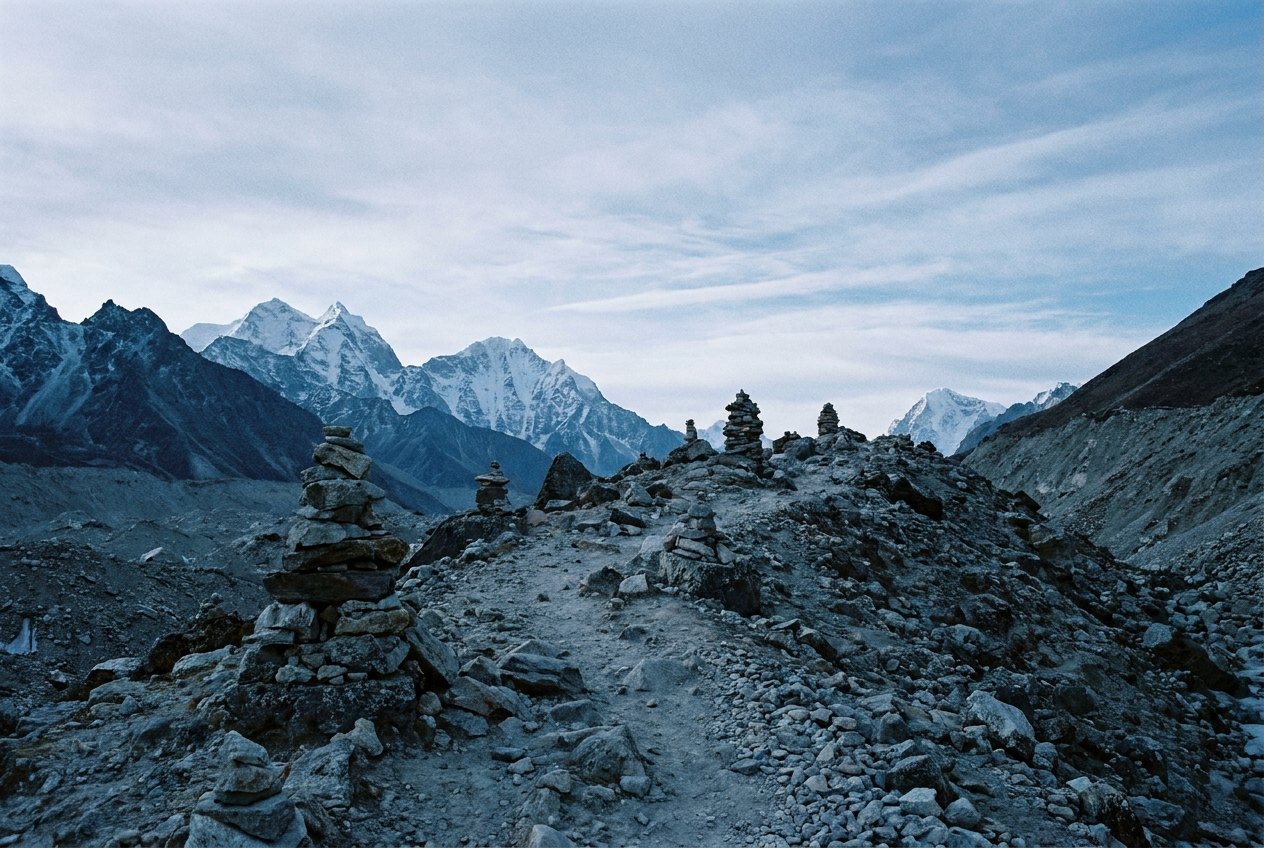
Altitude is the main risk on the trek to Everest Base Camp. Above about 2,500 metres, the air holds less oxygen with every step up, and the body needs days to adapt. Lukla sits at about 2,800 metres, Namche Bazaar at about 3,440, Dingboche at about 4,400, Lobuche at nearly 4,950, Gorak Shep at about 5,160 and Base Camp at about 5,360. Kala Patthar, the viewpoint above Gorak Shep, reaches more than 5,600 metres. Fitness has little to do with who gets altitude sickness; speed of ascent has a great deal to do with it.
Know the signs
Acute mountain sickness usually starts with a headache, often with nausea, loss of appetite, tiredness, dizziness or poor sleep. Mild symptoms are common on the way up and often pass with rest at the same height. They are a signal to stop climbing, not to push on.
Two more serious conditions can follow. Fluid on the lungs causes breathlessness at rest, a cough and weakness. Swelling of the brain causes confusion, clumsiness, a severe headache and unusual behaviour. Both can kill, and both need immediate descent and medical help. Watch your companions as well as yourself; people with altitude illness often do not recognise it in themselves.
How to acclimatise
The general rule above 3,000 metres is to increase the height at which you sleep by no more than about 300 to 500 metres a day, and to take a rest day every three or four days. Standard itineraries build this in with rest days at Namche and at Dingboche. On those days, walk up a few hundred metres in the morning and come back down to sleep: climb high, sleep low.
- Drink plenty of water, and go easy on alcohol.
- Eat even if you are not hungry; the body needs fuel to adapt.
- Talk to a doctor before the trip about preventive medication and whether it suits you.
Descent is the cure
If symptoms get worse despite rest, or any sign of the serious conditions appears, go down, even at night and even if it means only a few hundred metres. Lodges and guides along the route are used to this, and a descent from Lobuche or Gorak Shep to Pheriche or Dingboche often brings quick relief. Helicopter evacuations are common in the Khumbu. Make sure your insurance covers trekking at these heights and helicopter rescue, and carry the policy details with you.
Cold, water and the trail itself
Nights at the higher lodges are well below freezing, especially in autumn and winter. A warm sleeping bag, a down jacket, a hat and gloves are essential. Treat all drinking water with tablets, a filter or by boiling; buying plastic bottles all the way up leaves a large pile of waste in a fragile place. Pace yourself on the stone steps and keep to the mountain side of the path when yak trains or loaded porters pass, because a nudge on the outside edge can be dangerous.
The sun is fierce at altitude even when the air is cold. Snow and pale rock reflect it strongly, so wear sunglasses with good protection, a hat and sunscreen, and cover your lips. Dry air and dust cause the persistent cough that many trekkers call the Khumbu cough; a buff or scarf over the mouth on dusty sections helps, and lozenges are worth packing. Wash or sanitise your hands before eating, since stomach upsets are common in the lodges and weaken you at exactly the wrong time. If you fall ill with anything, rest at the same height or lower, rather than climbing on and hoping it passes.
The trek is well travelled and the risks are well understood. With a sensible pace, the rest days built into a standard itinerary and a willingness to turn round, most people reach Base Camp safely and come back with the best views of their lives. Our page on training for the trek covers the preparation at home.