
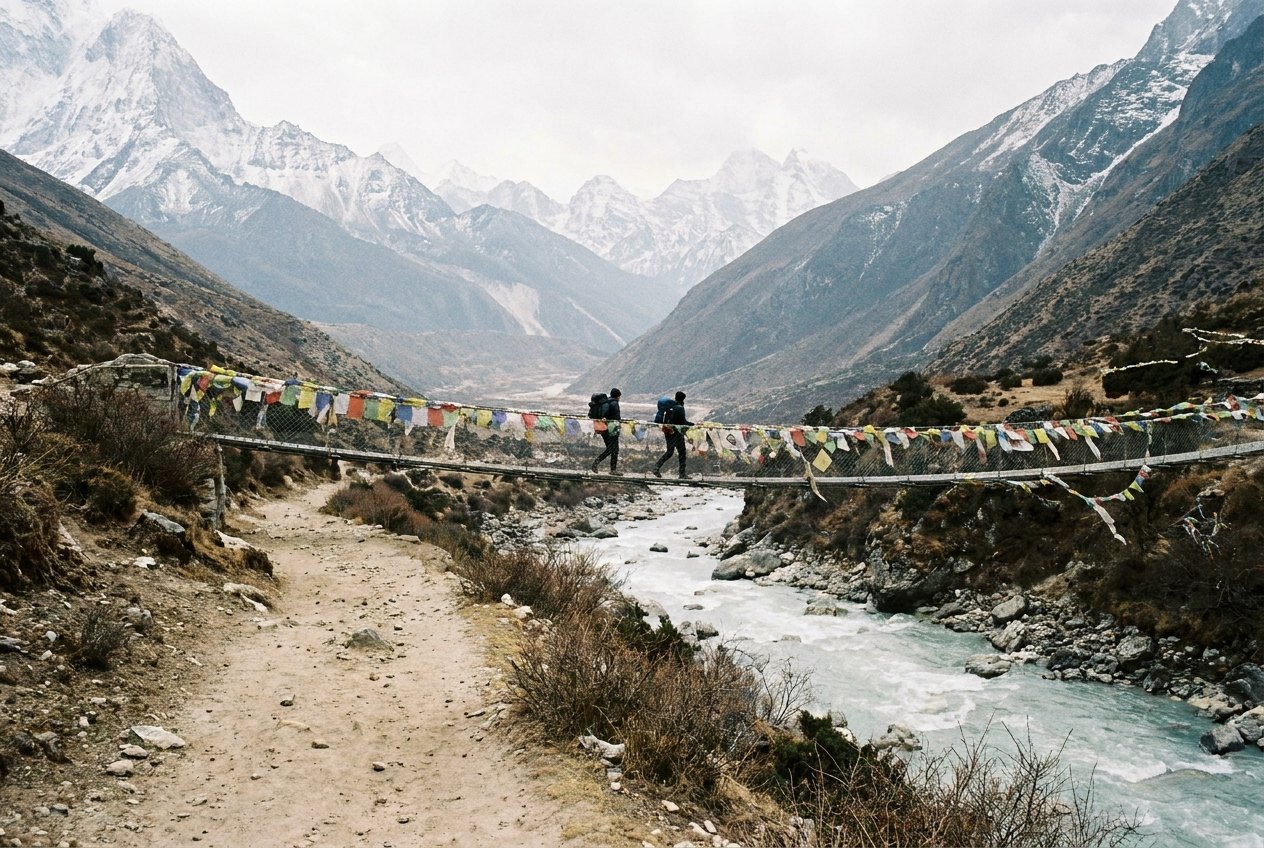
For many years the trek to Everest Base Camp was one of the classic independent walks in the Himalaya. The trail is easy to follow, the villages are close together and teahouses offer beds and meals all the way to Gorak Shep. Many people still find it comfortable to walk with company, and the rules have changed in recent years, so the choice deserves some thought.
The licensed-guide rule
In 2023 the Nepal Tourism Board announced that foreign trekkers in the country's national parks and conservation areas must walk with a licensed guide. How this rule applies in the Everest region has varied, and local authorities have taken their own positions on it.
What a guide does
A trekking guide leads the way, books beds in the teahouses, which can matter in busy seasons, deals with checkpoints and permits, and watches you for signs of altitude sickness. Good guides know the villages, the monasteries and the mountains, and they make it easier to talk to people along the way. In an emergency, a guide knows how to arrange a descent or an evacuation quickly.
When you choose one, ask about licences, experience at altitude, first-aid training and what happens if someone in the group falls ill. Meet before you agree, if you can, and agree in writing what is included.
A NOTE THAT FITS THE SAME TRIPAltitude and safety on the way to Base CampWhat a porter does
A porter carries your main bag between lodges, leaving you with only a daypack. On a long trek at altitude, this makes a huge difference to how you feel each evening. Some trekkers hire a porter-guide, one person who carries a moderate load and also shows the way, which suits small groups well.
Porters are central to the trekking economy, and their welfare matters. Keep your bag light; many organisations suggest a limit of around 20 to 25 kilograms for a trekking porter, and less is better. Ask whether the porter has insurance, warm clothing, proper footwear and somewhere to sleep at the higher lodges. On the trail you will also see porters carrying enormous loads of supplies for the villages; give them room on narrow paths and stand on the mountain side when yak trains pass.
Tipping and teahouse life
Tipping guides and porters at the end of a trek is expected. The amount depends on the length of the trek, the service and the size of the group; ask in Kathmandu what is normal at the time, and hand tips to each person directly.
Whatever you choose, nights are spent in teahouses: simple lodges with twin rooms, thin walls, a shared dining room heated by a stove in the evening, and menus that get shorter and pricier the higher you go. Hot showers, charging and internet are usually available for an extra fee lower down and become scarce higher up. Dal bhat, rice with lentil soup and vegetables, refilled until you stop, is the most reliable meal on the trail.
Walking with others, without a company
Some trekkers find a middle way: they hire a licensed guide or porter-guide directly, sometimes through a recommendation from other travellers, rather than buying a full package. This can work well, but it puts the checking on you. Confirm the person's licence, agree the daily rate and what it covers, including food and beds for the guide, and settle what happens if you turn back early or need extra days. Others join a small group arranged in Kathmandu, sharing a guide and splitting costs with strangers. That suits solo travellers who want company, as long as the group agrees on pace before setting out. On a trek where altitude decides so much, a group that moves at the speed of its slowest member is a safe group.
For the practical side of arranging all this, read our notes on planning the trek from Kathmandu, and on getting fit if you are thinking of carrying your own pack.