
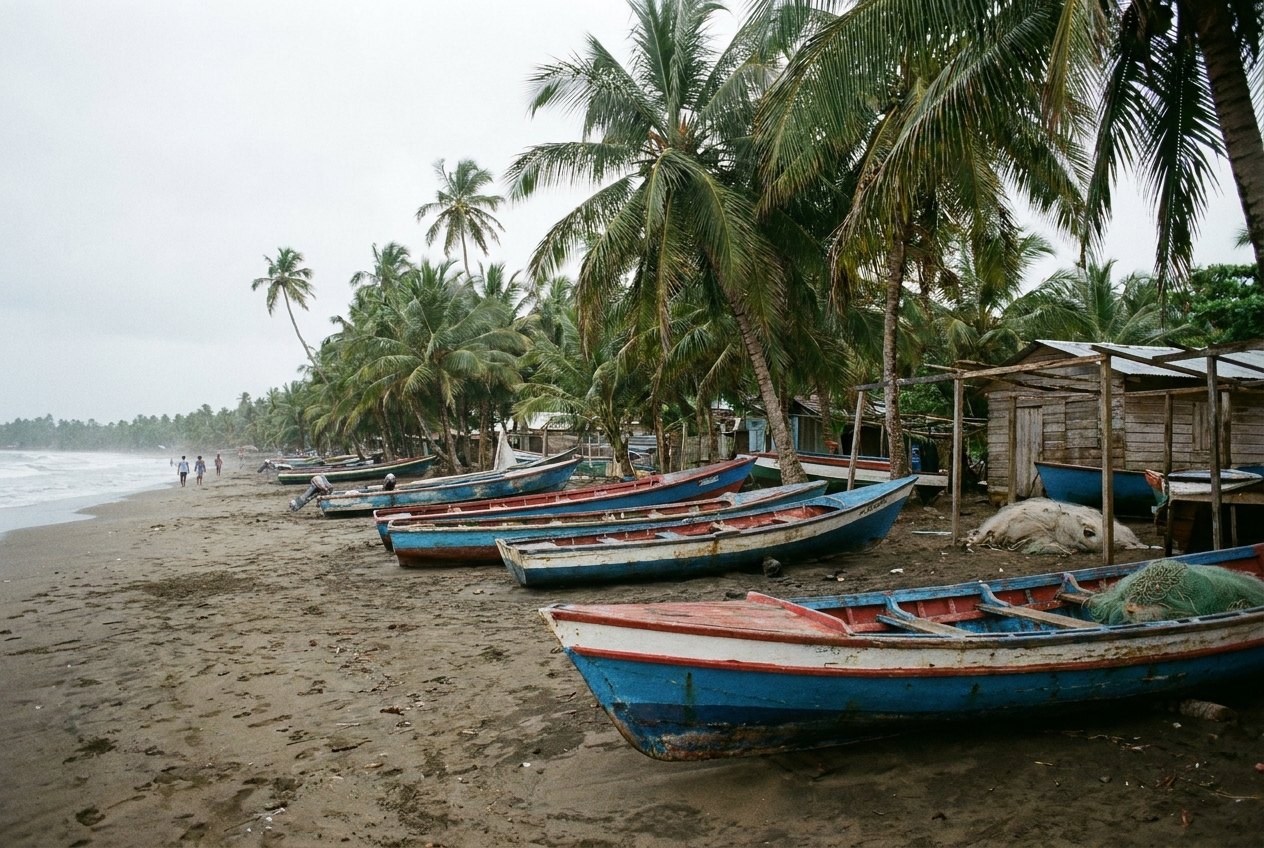
Hopkins lies on the Caribbean coast of Belize in the Stann Creek District, a few kilometres off the Southern Highway. The village stretches for several kilometres along the shore, a line of wooden and concrete houses, small gardens and fishing boats pulled up on the sand. It is one of the main centres of the Garifuna people in Belize, and many of its residents speak Garifuna as well as English and Kriol.
Who the Garifuna are
The Garifuna descend from West Africans and Indigenous Caribbean peoples who mixed on the island of Saint Vincent from the 17th century onwards. After conflict with the British, they were deported in the late 18th century to the coast of Central America, and over the following decades they settled along the shores of Honduras, Guatemala, Belize and Nicaragua. Their language, music and dance were proclaimed by UNESCO in 2001 as a masterpiece of the oral and intangible heritage of humanity.
In Belize, Garifuna Settlement Day on 19 November marks the arrival of Garifuna people on the coast in the early 19th century. It is a national holiday, and in Hopkins and Dangriga it is celebrated with re-enactments of the landing by boat, church services, drumming and dancing that go on through the night.
Drums and food
Garifuna drumming is the sound of Hopkins. Hand-made drums, usually played in pairs with a lead and a bass, accompany songs and dances such as punta. In the village you can hear drumming on many evenings, and several families teach drumming and drum-making to visitors.
The dish to try is hudut: fish cooked in a coconut broth with herbs, served with a mound of mashed green and ripe plantain pounded in a wooden mortar. Cassava bread, a thin, crisp flatbread made from grated cassava, is another Garifuna staple. Both are made by hand and take time, so ask in advance where you might eat them.
A NOTE THAT FITS THE SAME TRIPPlacencia: the end of the Belize peninsulaThe village and the beach
Hopkins is spread out, and the best way to get around is by bicycle along the main village road. The beach is long and quiet, with calm water much of the time thanks to the reef offshore. It is not a postcard resort; it is a working village, and that is its appeal. Fishermen bring in their catch in the morning, children walk to school along the road, and evenings are quiet apart from the drums. Sandflies come out at dawn and dusk.
Respect goes a long way here. Ask before you photograph people, homes or ceremonies, and dress modestly away from the beach. Many families welcome visitors to learn about their culture, but they are not on show. Buying craft, food and lessons directly from the people who make and teach them keeps the money in the village. Local buses run along the Southern Highway, and the walk or ride in from the highway junction takes some time, so plan your arrival in daylight. Water taxis and boats from the village go out to the cayes and the reef for snorkelling and fishing.
Cockscomb Basin Wildlife Sanctuary
Inland from Hopkins, the Cockscomb Basin Wildlife Sanctuary protects a large area of forest in the eastern slopes of the Maya Mountains. It was established in the 1980s as the world's first protected area set up specifically for jaguars. Seeing a jaguar is rare, because they are shy and mostly active at night, but the sanctuary is rich in other wildlife: birds, monkeys, tapirs, and many tracks in the mud.
Trails lead from the visitor centre to waterfalls, river pools where you can swim, and viewpoints. The steep climb to Ben's Bluff gives a view across the basin to the peaks. Go early, carry water and insect repellent.
Further south along the coast lies Placencia, about 45 minutes by road. If you are heading on into Guatemala, routes lead west to the Petén and the ruins of Tikal.