
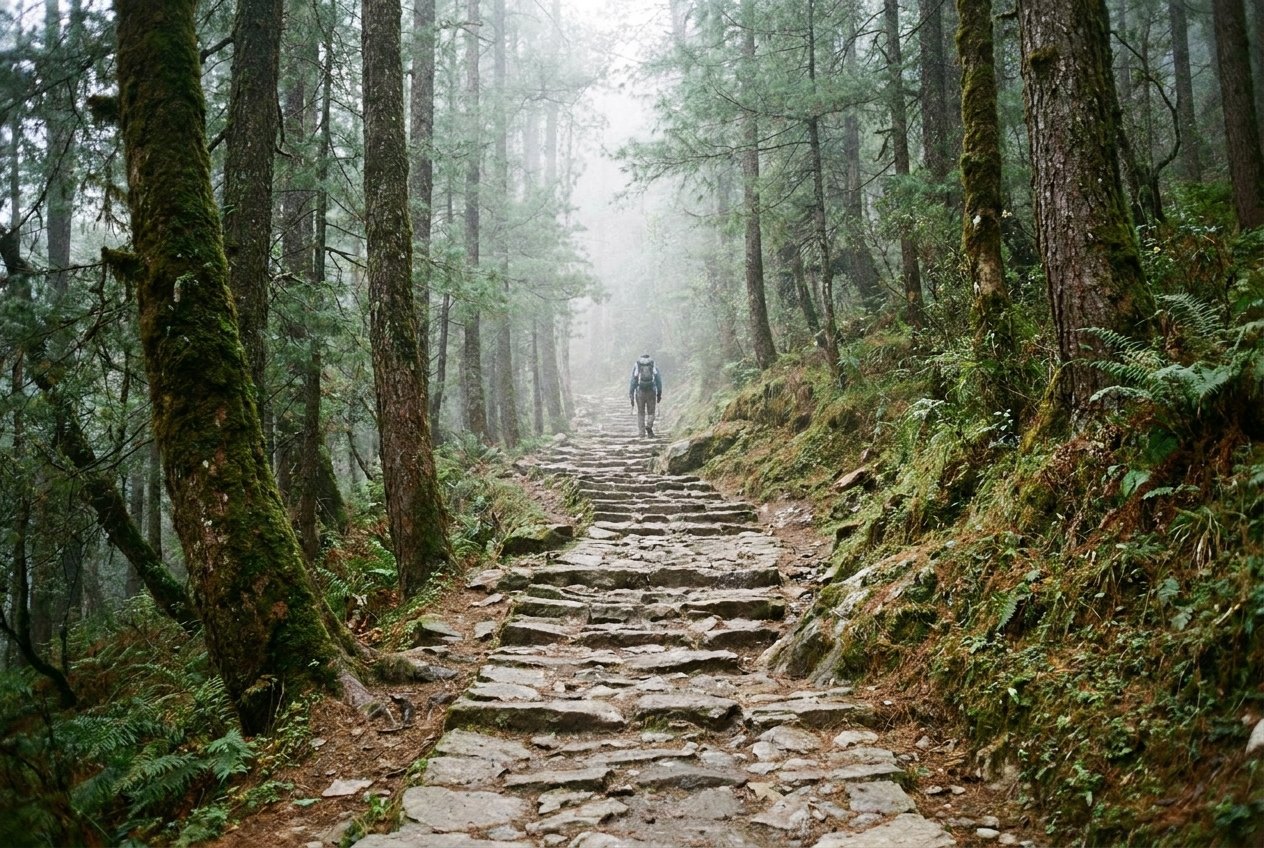
People of very different ages and backgrounds walk to Everest Base Camp every season. Very few are athletes. What they have in common, when the trek goes well, is that their legs and lungs are used to walking uphill for hours at a time. Fitness does not protect you from altitude sickness, which can affect anyone, but it means you arrive at each lodge with energy left, sleep better and enjoy the walk instead of enduring it.
What the days are like
A typical trekking day lasts five to seven hours of walking, often with long climbs and long descents on rough stone paths and steps. The pace is slow because of the altitude, and that is the point: on the way up, nobody should be racing. The hardest day for most people comes early, on the long, steep climb from the river up to Namche Bazaar, followed later by the higher, thinner-aired days between Dingboche and Gorak Shep. On the way down, the main strain moves to the knees.
You carry a daypack with water, layers, snacks and a camera. If you trek without a porter, your pack will be much heavier, and your training should reflect that.
A three-month plan
Start at least three months before you leave, earlier if you are not used to regular exercise. Aim for three or four sessions a week.
- Stairs or steep hills, once or twice a week. Climb steadily for 30 to 60 minutes with a daypack, building up the weight over the weeks.
- A long walk once a week, ideally on hilly ground, building towards four to six hours with a loaded pack. This is the single most useful session.
- Steady cardio on another day: cycling, swimming, running or brisk walking, for 45 minutes or more at a pace where you can still talk.
- Strength for legs and core: squats, lunges and step-ups. Ten or fifteen minutes after another session is enough.
A sample week, two months out
By the middle of your training, a week might look like this: on Monday, forty minutes of stairs with a daypack of about eight kilograms; on Wednesday, an hour of cycling or brisk walking; on Friday, leg and core strength work after a short walk; and on Saturday or Sunday, a hilly walk of four or five hours with the same pack. Rest on the other days. In the last two weeks before you fly, cut back: shorter sessions, no new injuries, and plenty of sleep. You want to arrive in Kathmandu rested, not worn out.
Descents and knees
Training plans tend to focus on going up, but on the trek the descents are long, steep and repetitive. Include downhill walking in your long hikes, and practise with trekking poles if you plan to use them. Poles take a real share of the load off the knees on the way down. Step-downs from a low box, done slowly, help to strengthen the muscles that control your knees.
Breaking in boots and building habits
Do all your long training walks in the boots and socks you will wear on the trek. Blisters at altitude heal slowly, and the choice of carrying your own pack or hiring a porter changes how much weight you should train with. Use the training weeks to learn what you like to eat and drink on a long walk, how often you need to stop, and which layers you reach for. On the trail you will drink more than you think, and practising the habit at home helps.
If you have a heart or lung condition, or any doubt about your health, talk to a doctor before you commit to the trek. And remember that being fit does not mean you can climb faster: the rest days at Namche and Dingboche are for acclimatisation, not for recovering from exhaustion, and they apply to everyone. Our page on altitude and safety explains why.